
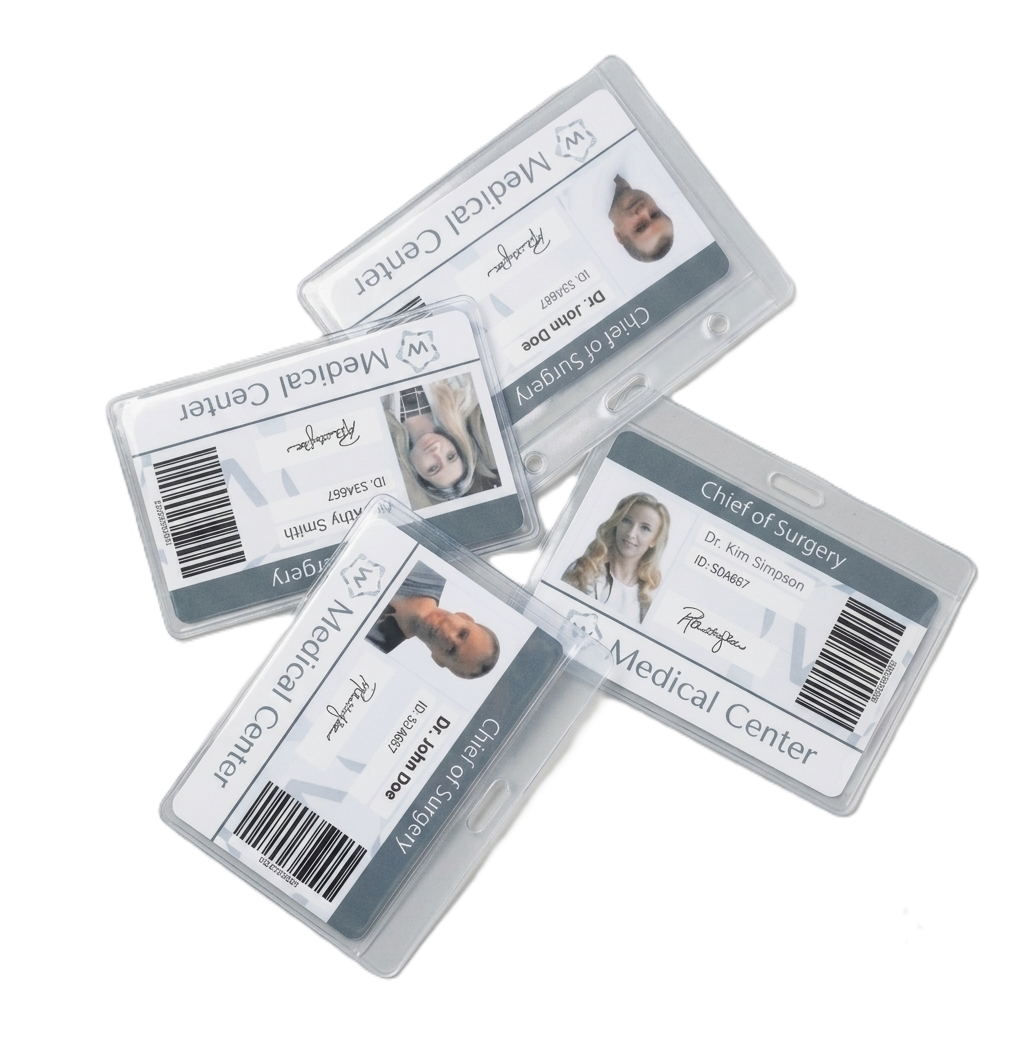
Healthcare facilities - Staff identification badges
Reliable healthcare staff identification is essential in hospitals, clinics and long-term care facilities. Unreadable, damaged or counterfeit badges compromise security and clinical workflows. This case study shows how laser marking enables production of durable, high-integrity and on-demand personalised badges, improving traceability, compliance and operational efficiency without consumables.
The Challenge
Badge production sits at the intersection of HR operations, security and regulatory compliance. Facilities must issue and track large volumes of credentials for clinical and administrative staff, often under strict time constraints.
Key challenges:
- Multi-layer data: each badge must contain name, role, department, employee ID, access level and barcodes or QR codes in a compact format.
- Chemical exposure: healthcare environments expose badges to alcohol-based sanitisers, chlorine solutions and enzymatic detergents that degrade traditional inks and laminates.
- Mechanical wear: badges worn on lanyards or clips undergo continuous bending, scratching and abrasion. Markings must remain legible for the entire operational life.
- Regulatory compliance: facilities must ensure identification is unambiguous and verifiable by patients and auditors alike.
- Anti-counterfeiting: in controlled areas, badge integrity is critical. Markings must be tamper-evident and impossible to replicate.
- Rapid personalisation: onboarding, role changes and transfers create continuous demand for custom badges that pre-printed solutions cannot meet.
- Long-term readability: badges must remain legible for audits, investigations and record reconciliation well beyond primary use.
The Solution
Laser marking applied directly to badge substrates (anodised aluminium, laserable PVC, polycarbonate) creates markings that are integral to the material itself, immune to chemical and mechanical stress in clinical environments.
How it addresses the challenges:
- Multi-data marking in one pass: the laser applies text, logos, barcodes and QR codes simultaneously at high resolution, no separate steps needed.
- Chemical resistance: no inks or adhesive layers means inherent protection against sanitisers, disinfectants and solvents, with legibility maintained through thousands of exposures.
- Abrasion resistance: markings are physically bonded to the material, resisting daily handling, lanyard friction and clip contact.
- Standardised output: precise and repeatable specifications - consistent fonts, contrast, layout - ensure compliance with facility requirements and audit standards.
- Tamper-evident: without transferable ink or label layers, badges are structurally non-replicable, protecting against fraud and unauthorised access.
- On-demand production: integration with HR systems enables immediate issuance during onboarding and instant reissuance for role changes.
- No consumables: no ribbons, inks or cartridges reduces cost per unit and eliminates supply chain friction.
- Permanent readability: markings remain legible indefinitely, both visually and by automated systems, supporting long-term audits and investigations.
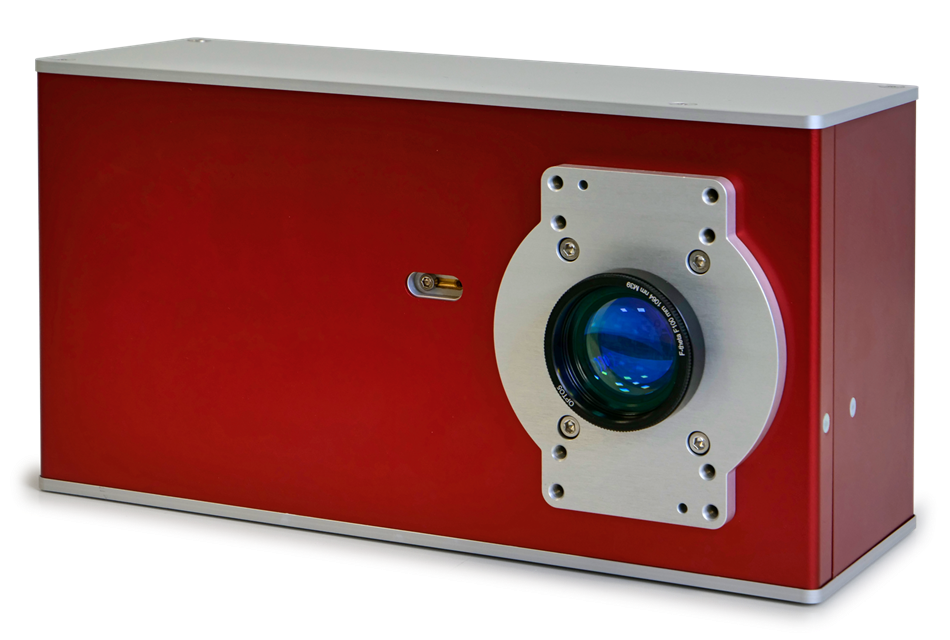
This case study demonstrates M-Pix's commitment to meeting the highest industry standards.
Related Products
Contact Us
We don't just build laser markers, we build partnerships. Whether you're an OEM engineer with a demanding integration challenge or a Distributor ready to expand your portfolio, we're ready to talk.