
Laser Marking in Manufacturing
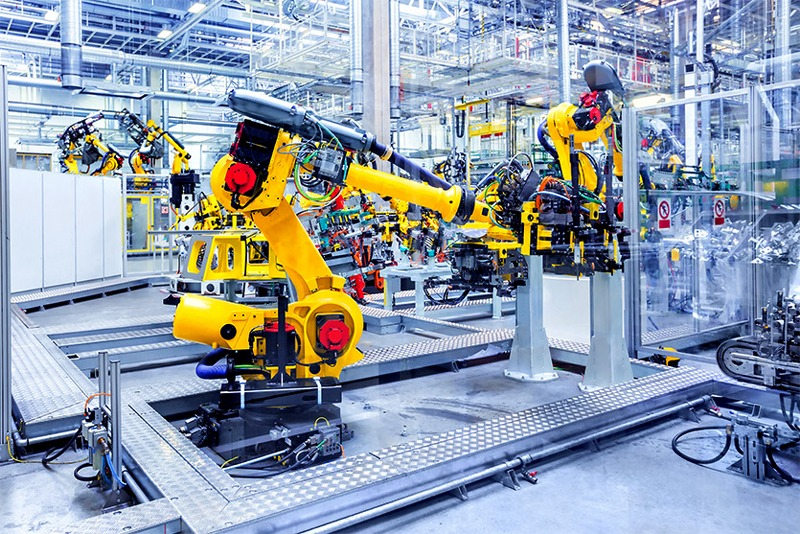
In industrial manufacturing, the ability to apply permanent, machine-readable identifications directly on components, assemblies, and cabling is a core requirement, not a value-added option. Production traceability, quality system compliance, and supply chain integrity all depend on reliable, durable part marking that survives the entire product lifecycle: assembly, testing, field operation, maintenance, and end-of-life recovery. Fiber laser marking meets these requirements across a broad range of materials and production environments, integrating directly into automated lines without consumables, downtime, or process interruption.
Why Choose Laser Marking for the Manufacturing?
Inline Integration with Automated Production Lines
Fiber laser marking systems are designed for integration into automated manufacturing cells. They interface with PLCs, industrial PCs, and MES/ERP platforms via standard protocols (RS-232, Ethernet, EtherNet/IP, Profinet), enabling fully automated mark triggering, variable data management, and production traceability without operator intervention. Marking cycles are measured in fractions of a second, compatible with high-throughput lines and just-in-time production flows. This makes laser marking viable not only as a standalone station but as an embedded process step within assembly, testing, or packaging cells.
Permanent Traceability and Serialisation
Laser markings are substrate-integrated and permanent, they cannot be removed, overwritten, or transferred without visible evidence of tampering. Each component can carry a unique serial number, data matrix code (ECC200, ISO/IEC 16022), QR code, or GS1-compliant barcode, directly linkable to production records, batch data, and quality inspection results. This enables full forward and backward traceability across the supply chain, supporting recall management, warranty tracking, and non-conformance investigation throughout the product lifecycle.
No Consumables, No Process Chemistry
Unlike inkjet coding, pad printing, or electrochemical etching, fiber laser marking requires no inks, solvents, etching compounds, or replacement tooling. Operating costs are limited to laser source maintenance over multi-thousand-hour service intervals. This reduces both process complexity and the environmental and safety implications associated with chemical marking methods, a relevant factor in manufacturing environments subject to ISO 14001 environmental management requirements.
Compliance with Manufacturing and Quality Standards
Fiber laser marking supports compliance with the principal quality and traceability frameworks applicable to industrial manufacturing:
- ISO 9001:2015 - quality management systems; laser marking integrates into validated, controlled identification processes with full audit trail capability.
- IATF 16949:2016 - automotive quality management standard; requires component-level traceability and process control that laser marking directly supports.
- GS1 General Specifications - defines barcode and data matrix symbologies, data structures, and Application Identifiers (AIs) for industrial part marking and supply chain identification.
- ISO/IEC 16022 - international standard for data matrix symbology; laser-marked codes are verifiable against ISO/IEC 15415 grading criteria for print quality and machine readability.
- ANSI MH10.8.2 - U.S. standard for data matrix symbol quality verification in industrial supply chain applications; laser-marked codes are testable against defined grade thresholds for print quality and machine readability.
High Precision on Complex Geometries
Manufacturing components frequently present marking challenges: curved surfaces, small contact areas, recessed features, or assemblies where spatial access is constrained. Fiber laser systems with rotary axes, telecentric flat-field optics, and programmable Z-axis compensation maintain marking focus and consistency on cylindrical, conical, and irregular surfaces. Line widths below 50 µm and positioning repeatability at the micron level ensure code readability even on miniaturised components or high-density marking areas.
Multi-Material Versatility
Fiber laser technology is compatible with the full spectrum of materials encountered in industrial manufacturing: carbon and stainless steels, aluminium alloys, copper, brass, titanium, hardened tool steels, anodised surfaces, and a wide range of engineering thermoplastics including PEEK, POM, PA, and PVC. On metals, annealing mode produces high-contrast, corrosion-resistant oxide markings with no material removal, preserving dimensional tolerances and surface finish on precision components.
Applications of Laser Marking in Manufacturing
M-Pix fiber laser systems are deployed across a wide range of industrial manufacturing applications:
- Wire and cable marking: direct marking on wire insulation materials (PVC, PTFE, PE, TPE, polyimide/Kapton) for cable harness identification in automotive, aerospace, and industrial wiring systems. Eliminates the need for adhesive labels or heat-shrink sleeves, producing permanent alphanumeric codes, wire gauges, voltage ratings, and sequential identifiers compliant with IPC/WHMA-A-620 and aerospace wiring standards (AS22759).
- Component serialisation and UIDmarking: unique identifier application on machined parts, castings, and formed components for production traceability, warranty management, and supply chain authentication.
- Automotive part marking: VIN-linked component coding, part number application, and data matrix marking on engine components, transmission parts, brackets, and structural assemblies, compliant with IATF 16949 traceability requirements.
- Electronic and electromechanical assemblies: marking of PCBs, connectors, housings, and terminal blocks with serial numbers, revision codes, and compliance symbols (CE, RoHS, UL).
- Hydraulic and pneumatic components: permanent identification of valves, cylinders, fittings, and manifolds in stainless steel and aluminium, resistant to fluids, pressure cycling, and cleaning agents.
- Tooling and die identification: marking of moulds, jigs, fixtures, and cutting tools with part references, material grades, and maintenance tracking codes.
- Nameplate and rating plate replacement: direct laser marking on equipment housings and enclosures as a permanent alternative to riveted or adhesive nameplates, carrying electrical ratings, certification marks, and manufacturer data.
- Metal packaging and industrial containers: batch codes, date stamps, and traceability data on aluminium and steel containers, replacing ink-based coding where chemical resistance or contact with sensitive products is required.
- Metal packaging and industrial containers: batch codes, date stamps, and traceability data on aluminium and steel containers, replacing ink-based coding where chemical resistance or contact with sensitive products is required.
Related Products
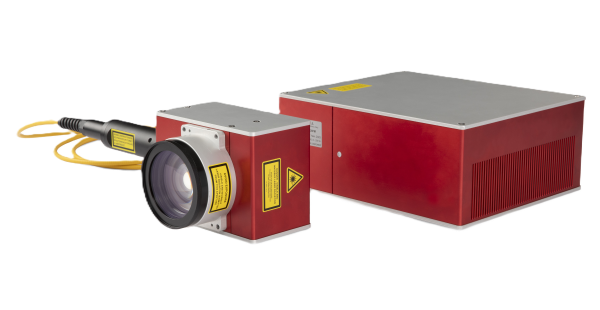
MP30/60/100FM - The general-purpose fiber laser marker
MOPA technology, with a particularly competitive price positioning.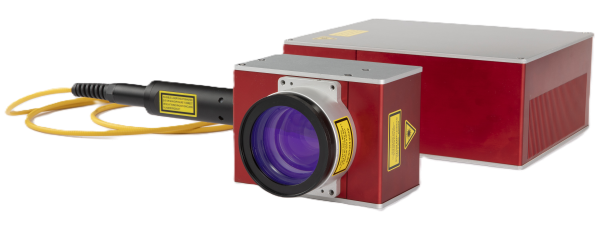
MP50F - The powerful yet cost-effective 50W fiber laser marker
FAQ
The M-Pix fiber laser family allows marking of aluminum with different modes: deep engraving for permanent traceability or annealing (called "annealing") for high-contrast black markings without material removal. The MOPA (Master Oscillator Power Amplifier) technology, in particular, provides precise thermal control that prevents deformation, making it ideal for precision aerospace or automotive components where dimensional tolerances are critical.
Laser creates a permanent, substrate-integrated mark that cannot be removed or overwritten without visible evidence of tampering. Unlike inkjet, it requires no consumables, solvents, or frequent maintenance, reducing operational costs and environmental risks. Additionally, it ensures compliance with stringent standards such as ISO 14001 and IATF 16949, eliminating issues like smudging or fading typical of chemical methods.
Absolutely. Our systems are designed for native integration with PLC, industrial PCs and MES/ERP platforms. They support standard protocols such as RS-232, Ethernet, EtherNet/IP and ProfiNet, enabling automatic marking activation, real-time variable data management and complete traceability without human intervention, even in just-in-time production cycles.
By using rotating axes, telecentric optics with flat field and programmable Z-axis compensation, our lasers maintain focus and uniformity on cylindrical, conical and irregular surfaces. This ensures the readability of codes (including Data Matrix or QR-code) on miniaturized components or in limited access areas, with micrometric positioning repeatability.
Our systems fully support compliance with ISO 9001:2015 (quality management), IATF 16949:2016 (automotive sector), and international standards for symbology such as GS1, ISO/IEC 16022 (Data Matrix) and ANSI MH10.8.2. The marked codes are verifiable according to ISO/IEC 15415 criteria, ensuring readability by machines even after years of use in harsh environments.
Yes, thanks to the MOPA (Master Oscillator Power Amplifier) technology and independent control of pulse duration, we can process heat-sensitive materials (such as PEEK, POM, PVC or anodized surfaces) without damaging them. The annealing mode allows creating high-contrast markings on metals without material removal, preserving dimensional tolerances and original surface finish.
Each component can receive a unique serial number, a Data Matrix or QR-code directly linked to production records and batch data. This enables complete traceability upstream and downstream, supporting recall management, warranty monitoring and non-conformance investigations throughout the supply chain, as required by industry standards.
Contact Us
We specialize in tailor-made solutions for industrial laser markers, and we're looking forward to hearing all about your ambitious production projects.